Mastering Miami SEO: Unlocking Local Digital Dominance
In today's hyper-connected digital landscape, businesses in Miami face a unique set of challenges and opportunities. The Magic City is not just another metropolitan area—it's a vibrant melting pot of cultures, languages, and economic activities that demands a specialized approach to search engine optimization. Miami's competitive market, characterized by its multicultural and bilingual environment, requires businesses to go beyond traditional SEO tactics and embrace strategies tailored to the local context.
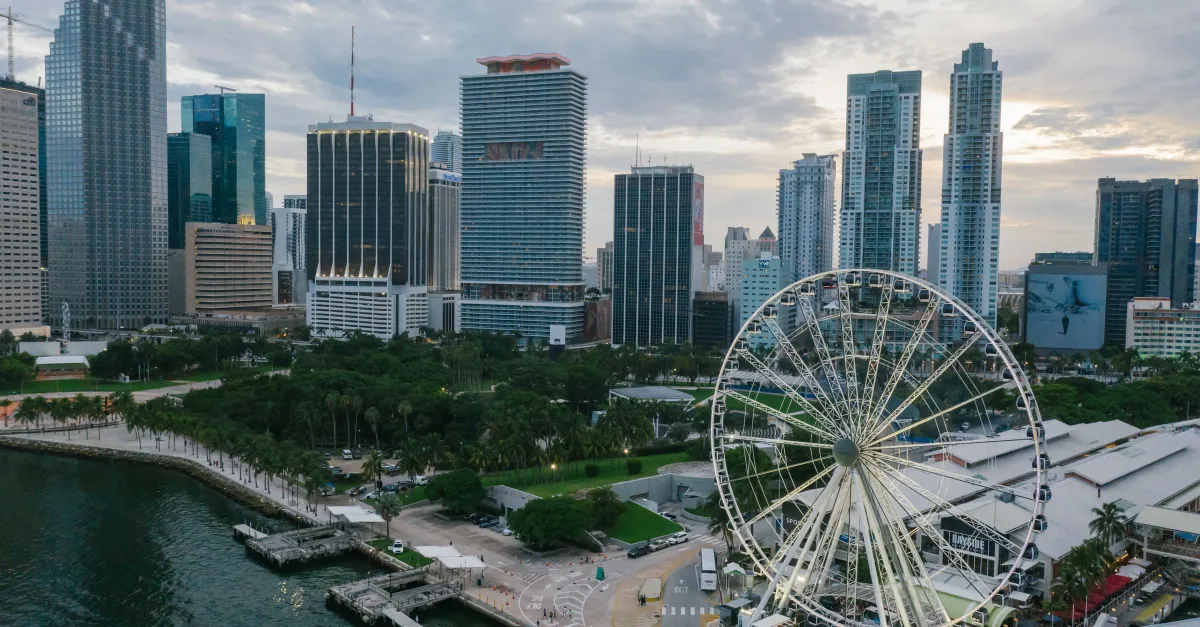
Local SEO has become the cornerstone of digital success for Miami businesses. Whether you're a restaurant in Wynwood, a law firm in Brickell, or a retail store in Coral Gables, your ability to appear in local search results directly impacts your bottom line. With over 70% of Miami residents speaking Spanish at home and a constant influx of tourists searching for services on their mobile devices, the stakes have never been higher.
The importance of local SEO in Miami cannot be overstated. When potential customers search for "restaurants near me," "Miami Beach hotels," or "abogado en Miami," your business needs to be visible at the exact moment of intent. This visibility translates directly into foot traffic, phone calls, and online conversions.
Miami's vibrant, competitive market demands more than just a basic online presence.
Understanding the Miami Market's Unique Attributes
Miami is unlike any other city in the United States. Its position as a gateway to Latin America, combined with its status as a major tourism destination, creates a digital marketplace that operates on multiple levels simultaneously. Understanding these unique attributes is essential for crafting effective SEO strategies that resonate with your target audience.
The Bilingual Reality
Perhaps the most defining characteristic of Miami's market is its bilingual nature. With approximately 70% of residents speaking Spanish at home, businesses cannot afford to operate in English only. This linguistic diversity extends beyond simple translation—it encompasses cultural nuances, idiomatic expressions, and regional variations that differ between Cuban Spanish, Venezuelan Spanish, Colombian Spanish, and other Latin American dialects prevalent in the city.

Search behavior reflects this bilingual reality. Users often switch between English and Spanish mid-search, use Spanglish terms, or search for the same service in both languages. A comprehensive Miami SEO strategy must account for this linguistic fluidity by optimizing content in both languages, incorporating mixed-language keywords, and understanding the cultural context behind search queries.
Tourism-Driven Economy
Miami's economy is heavily influenced by tourism, with millions of visitors arriving each year from across the globe. This creates a dual audience for many businesses: local residents and tourists. Search patterns differ significantly between these groups. While locals might search for "best Cuban restaurant in Little Havana," tourists are more likely to search for "things to do in Miami Beach" or "top-rated Miami restaurants."
Mobile-First Search Dominance
Miami's demographic skews younger and more tech-savvy than many other major U.S. cities. Coupled with the high percentage of tourists who rely on their smartphones to navigate the city and find services, mobile search dominates the landscape. Studies indicate that over 80% of local searches in Miami originate from mobile devices, and more than half of mobile searches result in a visit to a physical location within 24 hours.
Core Elements of an Effective Miami SEO Campaign
Building a successful SEO campaign in Miami requires a multi-faceted approach that addresses technical foundations, local signals, and content strategy. Each element works synergistically to improve visibility, drive traffic, and convert searchers into customers.
On-Page SEO Optimization
On-page SEO forms the foundation of any successful campaign. In the Miami context, this means optimizing every page element with local intent in mind. Title tags should incorporate both the primary keyword and geographic modifiers (e.g., "Miami," neighborhood names, "South Florida"). Meta descriptions must be compelling and include local identifiers that improve click-through rates from search results.

Header tags (H1, H2, H3) should follow a logical hierarchy and naturally incorporate local keywords and related terms. Content should address local concerns, reference Miami-specific landmarks or neighborhoods, and demonstrate genuine understanding of the local market. For bilingual businesses, this means creating fully optimized versions of pages in both English and Spanish, not simply relying on automated translation tools.
Google Business Profile (GMB) Optimization
For local businesses, the Google Business Profile (formerly Google My Business) may be the single most important element of your online presence. A fully optimized GMB listing can appear in the coveted "Local Pack"—the three business listings that appear at the top of Google search results for local queries.
Local Citations and Directory Listings
Citations—mentions of your business name, address, and phone number across the web—serve as trust signals to search engines. The quantity, quality, and consistency of citations impact your local search rankings. Focus first on major data aggregators like InfoUSA, Localeze, Factual, and Acxiom, as these feed information to hundreds of other directories.
Content Marketing for Local Audiences
Content remains king in SEO, but in the local context, content must serve local audiences and address local topics. A Miami HVAC company shouldn't just write about "choosing the right air conditioner"—they should write about "surviving Miami's brutal summer heat" or "how Miami's humidity affects your AC efficiency."
Effective bilingual SEO goes beyond simple translation. It necessitates local cultural understanding, idiomatic expressions, and region-specific terminology.
Technical SEO in Miami's Competitive Landscape
While content and citations capture much of the attention in local SEO discussions, technical SEO provides the foundation upon which all other efforts rest. In Miami's competitive digital environment, even small technical advantages can translate into significant ranking improvements and traffic gains.
Site Speed Optimization
Page speed directly impacts both user experience and search rankings. Google has explicitly stated that site speed is a ranking factor, particularly for mobile search. In a market where users expect instant results and have dozens of alternatives available at the tap of a screen, every fraction of a second matters.
Image optimization often provides the most significant speed improvements. Compress images without sacrificing quality. Implement lazy loading so images load only as users scroll to them. Use next-generation formats like WebP that provide superior compression. For a business with extensive photo galleries, these optimizations can reduce page weight by 60% or more.
Structured Data and Schema Markup
Structured data provides explicit context to search engines about the content on your pages. Rather than relying on algorithms to interpret your content, schema markup directly communicates what information represents. For local businesses, this is transformative.
Leveraging Local Keywords for Targeted Visibility
Keyword research in the local context differs fundamentally from broader SEO. While traditional keyword research focuses on search volume and competition, local keyword research must also consider geographic modifiers, neighborhood names, and the specific language patterns of your target audience.
Neighborhood-Specific Keyword Strategies
Miami isn't a monolith—it's a collection of distinct neighborhoods, each with its own character, demographics, and search behavior patterns. Keywords that perform well in Wynwood might be irrelevant in Coral Gables. A successful local keyword strategy recognizes and capitalizes on these neighborhood-level differences.
AI-Driven Keyword Analysis
Artificial intelligence has transformed keyword research from a manual, time-intensive process into a dynamic, data-driven science. AI-powered tools can analyze millions of search queries, identify patterns, predict trending topics, and uncover keyword opportunities that manual research would miss.

In a city that is as much a hub for culture and tourism as it is for commerce, blending local storytelling with strategic SEO creates a powerful synergy.
The Power of a Localized Content Strategy
Content strategy in Miami must balance search optimization with cultural relevance and local connection. Generic, templated content fails to resonate with local audiences and misses opportunities to differentiate from competitors. Truly effective content demonstrates deep understanding of the Miami market, addresses local concerns, and reflects the city's unique character.
Cultural Content That Connects
Miami's cultural richness provides endless content opportunities for businesses willing to engage authentically with the community. Content that references local culture, celebrates community events, and acknowledges the city's diverse heritage creates emotional connections that generic content cannot achieve.

Harnessing Miami's Bilingual Audience
Perhaps no factor distinguishes Miami SEO from other markets as profoundly as the need for bilingual optimization. With 70% of residents speaking Spanish at home and a constant flow of Spanish-speaking tourists and business visitors, bilingual SEO isn't optional—it's essential for reaching the majority of your potential market.
Beyond Translation: Cultural Adaptation
The most common mistake in bilingual SEO is treating Spanish content as a simple translation of English content. Effective bilingual optimization requires cultural adaptation—understanding that Spanish-speaking audiences may have different concerns, priorities, information needs, and cultural references than English-speaking audiences.

Optimizing Mobile Experiences for Miami's On-the-Go Audience
Mobile optimization transcends responsive design—it requires rethinking the entire user experience for mobile contexts and behaviors. In Miami, where mobile devices drive the majority of local searches and where tourism amplifies mobile usage, mobile optimization directly determines business success or failure.
Mobile-First Indexing Reality
Google's mobile-first indexing means the search engine predominantly uses the mobile version of content for indexing and ranking. If your mobile site lacks content, features, or structured data present on your desktop site, Google may not index that information at all. This makes mobile optimization not just a user experience consideration but a fundamental ranking factor.

SEO Strategy Comparison: Traditional vs. Miami-Focused Approach
| Element | Traditional SEO | Miami-Optimized SEO |
|---|---|---|
| Keyword Strategy | Single-language, broad geographic terms | Bilingual keywords, neighborhood-specific terms |
| Content Approach | Generic industry content | Cultural references, local events, community focus |
| Citation Building | Major directories only | English & Spanish directories, local Miami sites |
| Mobile Priority | Responsive design baseline | Click-to-call, maps, location services integration |
| Schema Markup | Basic business information | Bilingual markup, neighborhood identifiers, event data |
| Link Building | Industry sites, general directories | Local news, community sites, neighborhood organizations |
Artificial intelligence has revolutionized SEO, offering predictive analytics, content personalization, and automation tools that are vital in a competitive environment like Miami.
Leveraging Local Event and Seasonal Keywords
Miami's vibrant event calendar creates predictable traffic spikes throughout the year. Businesses that anticipate and optimize for these events capture valuable traffic from both residents and visitors seeking event-related services and experiences.
Major Miami Events and SEO Opportunities
Art Basel Miami Beach represents one of the most significant annual events, attracting over 80,000 visitors from around the world. For businesses in hospitality, dining, transportation, and cultural sectors, Art Basel week represents a traffic and revenue opportunity worth months of optimization effort.

Miami SEO Campaign Implementation Timeline
- Month 1: Foundation & AuditComprehensive SEO audit, competitor analysis, keyword research (English & Spanish), technical SEO fixes, GMB optimization, citation audit and cleanup.
- Months 2-3: Content & On-PageHomepage and service page optimization, neighborhood landing pages creation, bilingual content development, schema markup implementation, mobile optimization enhancements.
- Months 4-6: Authority BuildingLocal link building campaigns, citation expansion, review generation strategy, social media integration, community partnership development.
- Months 7-9: Expansion & OptimizationContent marketing expansion, video content creation, event-based campaigns, additional neighborhood targeting, conversion rate optimization.
- Months 10-12: Scaling & RefinementPerformance analysis and strategy refinement, competitive response tactics, advanced technical optimization, AI-driven personalization implementation, long-term growth planning.
AI-Driven Optimization: The Future of Miami SEO
Artificial intelligence has fundamentally transformed SEO from a largely manual practice to an increasingly automated, data-driven discipline. In Miami's competitive market, businesses that leverage AI-powered optimization tools gain substantial advantages in efficiency, insight generation, and performance optimization.
Predictive Analytics and Trend Forecasting
AI-powered predictive analytics can identify emerging trends before they reach peak search volume, allowing proactive content creation and optimization. By analyzing historical data patterns, social media trends, and early search signals, machine learning models forecast which topics, services, or products will see increased interest in coming weeks or months.

Hyper-Local Content with Data-Driven Insights
As Miami's neighborhoods continue to develop distinct identities and demographics, hyper-local content strategies deliver increasingly powerful results. Generic "Miami" content no longer suffices—businesses must create content that speaks to specific neighborhoods, understanding each area's unique characteristics, concerns, and culture.
Each Miami neighborhood deserves dedicated content that addresses its specific attributes. Wynwood content might emphasize creative culture, street art, and hip dining scenes. Coral Gables content focuses on historic architecture, upscale shopping, and family-friendly amenities. Little Havana content celebrates Cuban culture, traditional cuisine, and community heritage.
Structured Data for Rich Snippets and Enhanced Visibility
Structured data markup—particularly schema.org vocabulary—enables rich snippets that enhance your search appearance and increase click-through rates. For local businesses, implementing comprehensive structured data can mean the difference between standard search listings and prominent, information-rich displays that dominate search results.

Mobile and Voice Search Optimization
Voice search has fundamentally altered search behavior, particularly for local queries. As voice assistants become ubiquitous—integrated into smartphones, smart speakers, car systems, and wearable devices—optimizing for voice search becomes essential for local visibility.
Voice searches differ linguistically from typed searches. While someone might type "Miami plumber emergency," they would ask their voice assistant "Where can I find an emergency plumber in Miami?" Voice search optimization requires creating content that answers these natural language, question-based queries.
Success in Miami's highly competitive environment hinges on more than initial optimization; it requires a strategic, data-informed approach that anticipates market changes.
Reputation Management and Social Engagement
Online reputation directly impacts both consumer decision-making and search rankings. Google's algorithms consider review quantity, recency, and ratings as ranking factors for local searches. Beyond algorithmic impact, reviews influence the majority of consumers' purchase decisions, making reputation management a critical SEO component.

Multi-Channel Local Digital Strategies
SEO operates most effectively as part of an integrated digital marketing strategy. Combining organic search optimization with paid search, social media advertising, and other digital channels creates synergies that amplify overall results beyond what any single channel achieves independently.
While organic SEO builds long-term visibility, paid search provides immediate results and valuable data. Geo-targeted Google Ads campaigns allow precise targeting by neighborhood, radius around specific locations, or even targeting users who recently visited competitor locations.
Local Link Building and Partnerships
Links remain a crucial ranking factor, but local link building requires strategies different from broader link building campaigns. The goal is acquiring links from locally-relevant, authoritative sources that signal to search engines your business's connection to the Miami community.
Social Media Integration for Amplified Local Reach
Social media platforms serve as critical channels for local business visibility, community engagement, and content amplification. Each platform offers unique opportunities to connect with Miami audiences and support overall SEO objectives through increased brand visibility and content distribution.

Conversion Optimization: Turning Visibility into Revenue
SEO's ultimate value isn't rankings or traffic—it's revenue generation. Conversion optimization ensures that the traffic your SEO efforts generate converts into leads, sales, and revenue. Even modest improvements in conversion rates can dramatically impact ROI from SEO investments.
Local Schema Markup Implementation
Schema markup for local businesses extends beyond basic LocalBusiness schema to include detailed information that enhances search appearance and provides context to search engines about your business, services, and offerings.
Implement LocalBusiness schema (or more specific types like Restaurant, LegalService, or MedicalBusiness) with complete information including business name, address, phone number, geographic coordinates, hours of operation, accepted payment methods, price range, and areas served.
NAP Data Consistency Across the Web
Name, Address, and Phone Number (NAP) consistency forms a fundamental local SEO element. Inconsistent NAP information across directories, citations, and your website confuses search engines and dilutes the authority of your business listings.
Establish a single, standardized format for your business name, address, and phone number, then use this exact format everywhere your business appears online.
Advanced Local Link Building Strategies
Beyond basic citation building and directory listings, advanced link building strategies target high-authority, locally-relevant backlinks that significantly impact search rankings while also driving referral traffic.

Google Business Profile Advanced Optimization
While basic GMB optimization covers fundamental elements, advanced optimization techniques can provide competitive advantages in Miami's crowded local search landscape.
Google Business Profile allows one primary category and multiple additional categories. Category selection directly influences which searches trigger your listing. Choose the most specific primary category that describes your business, then add relevant secondary categories to capture additional search queries.
Voice Search: The Conversational Future
Voice search represents the fastest-growing search modality, with implications that extend far beyond simple optimization tactics. Understanding voice search behavior and optimizing accordingly positions businesses for the continuing evolution toward conversational search experiences.
Voice queries use natural, conversational language fundamentally different from typed searches. Optimize for question-based queries using who, what, when, where, why, and how. Structure content to provide direct, concise answers to common questions rather than requiring users to read through paragraphs to find information.
Analytics and Performance Tracking
Comprehensive analytics enable data-driven decision making, ROI measurement, and continuous optimization. Tracking the right metrics—and understanding what they reveal about campaign performance—separates successful SEO campaigns from efforts that consume resources without delivering measurable results.
Neighborhood-Specific Campaign Strategies
Miami's diverse neighborhoods require tailored approaches that acknowledge each area's unique demographics, culture, and consumer behavior. A one-size-fits-all approach fails to capture the nuances that drive success in specific neighborhoods.
Wynwood: Creative and Cultural Focus
Wynwood's identity as Miami's arts district attracts creative professionals, tourists, and culture enthusiasts. Content for Wynwood audiences should emphasize creativity, uniqueness, and artistic appreciation. Visual content performs particularly well—Instagram and TikTok provide ideal platforms for Wynwood-focused businesses.
Coral Gables: Upscale and Historic Appeal
Coral Gables attracts affluent families and professionals valuing quality, tradition, and Mediterranean-inspired aesthetics. Content should emphasize quality, expertise, and heritage.
Little Havana: Cultural Heritage and Community
Little Havana's strong Cuban cultural identity requires Spanish-language optimization and cultural sensitivity. Content should celebrate Cuban heritage, reference community traditions, and demonstrate cultural understanding.
Doral: Family-Oriented and Venezuelan Influence
Doral's demographics skew family-oriented with strong Venezuelan community representation. Content should address family needs, emphasize safety and education, and acknowledge the Venezuelan cultural presence.
Brickell: Urban Professionals and Luxury
Brickell attracts young professionals and luxury consumers. Content should emphasize convenience, quality, and sophistication. Mobile optimization is particularly critical given Brickell's on-the-go professional demographic.
Frequently Asked Questions
How long does it take to see results from Miami SEO efforts?
SEO is a long-term strategy, not a quick fix. Most businesses begin seeing meaningful improvements within 3-6 months, with significant results typically appearing after 6-12 months of consistent effort. The timeline depends on your starting position, competition level, industry, and the comprehensiveness of your optimization efforts.
Is bilingual SEO really necessary for Miami businesses?
For most Miami businesses, yes. With 70% of Miami residents speaking Spanish at home and a constant flow of Spanish-speaking tourists and business visitors, businesses that operate in English only exclude the majority of potential customers.
How important are Google reviews for local SEO rankings?
Google reviews are critically important for both rankings and conversions. Review quantity, recency, rating average, and review velocity all influence local search rankings. Beyond algorithmic impact, reviews influence consumer decisions.
Should I create separate pages for each Miami neighborhood I serve?
Yes, for neighborhoods where you have significant presence or want to attract customers. Each neighborhood page should provide unique, valuable content about serving that specific area, not simply duplicate content with the neighborhood name swapped.
What's the ROI of investing in local SEO versus paid advertising?
SEO and paid advertising serve different but complementary purposes. Paid advertising delivers immediate results but requires ongoing spending. SEO requires more time to show results but builds compound value over time.
How often should I update my website content for SEO?
Content freshness signals matter for SEO, particularly for time-sensitive topics. Update cornerstone content quarterly to maintain accuracy and freshness. Add new blog content weekly or bi-weekly. Quality matters more than quantity.
Key Takeaways: Mastering Miami Local SEO
- Miami's unique bilingual, multicultural market requires specialized SEO approaches that go beyond traditional strategies
- Bilingual optimization (English and Spanish) is essential for reaching Miami's diverse population—translation alone isn't sufficient
- Mobile optimization is critical, with over 80% of Miami local searches originating from mobile devices
- Neighborhood-specific content and targeting captures Miami's diverse geographic market more effectively than generic city-wide content
- Google Business Profile optimization can deliver the fastest local SEO results and should be a top priority
- Technical SEO foundations—site speed, mobile responsiveness, and structured data—enable other optimization efforts to succeed
- AI-powered tools provide competitive advantages through predictive analytics, automation, and personalization at scale
- Review generation and reputation management directly impact both rankings and conversion rates
- Local link building from community organizations, media, and relevant local sites builds authority and relevance
- SEO success requires ongoing effort, measurement, and optimization—it's a continuous process, not a one-time project
